
1st April 2026
Object of the Month: Brahmin’s Flask / Kamandal
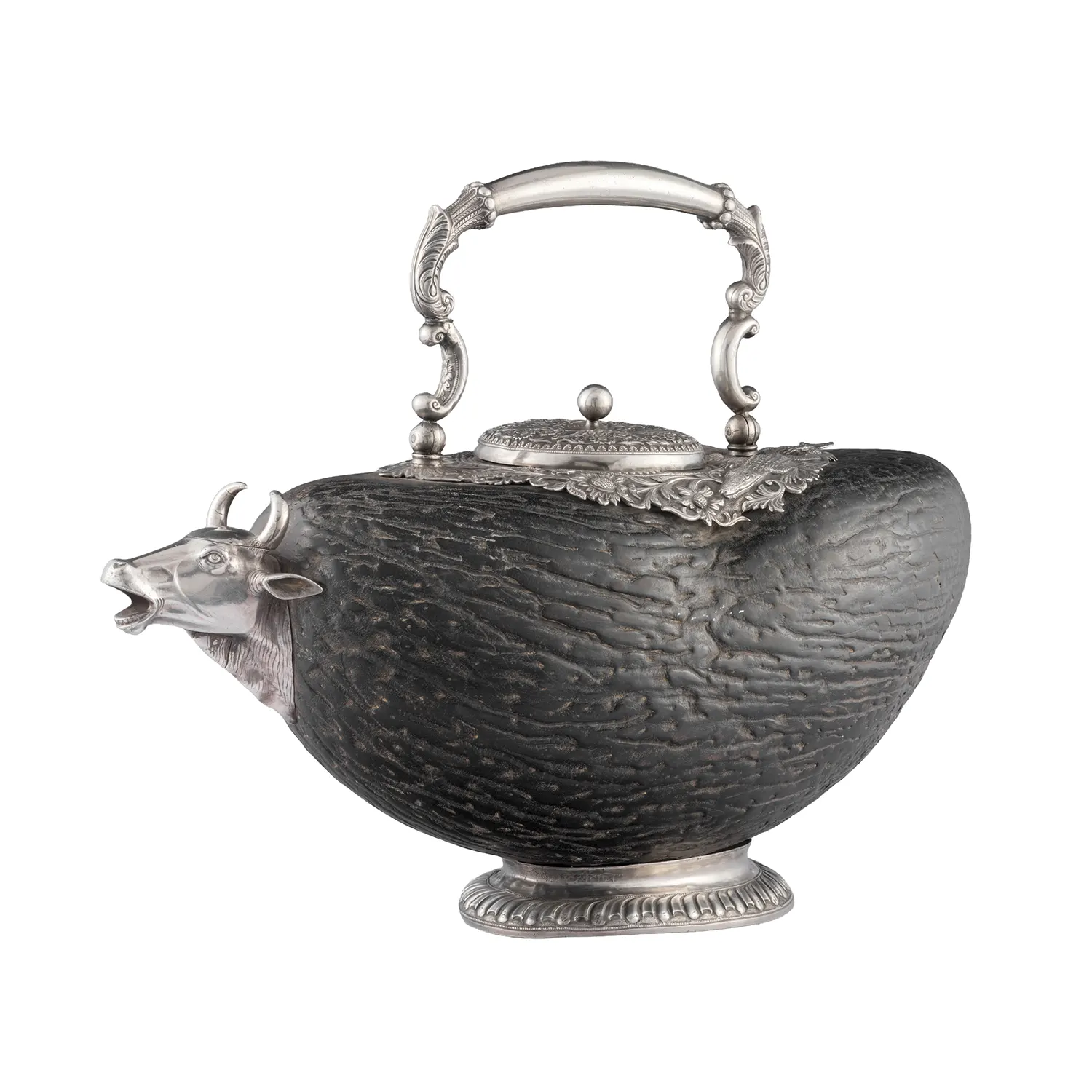
This month’s featured object is a rare and symbolically rich Brahmin’s water flask, traditionally known as a kamandal. Crafted from coco de mer the remarkable sea coconut prized for its rarity and organic form,the vessel is elevated through intricate silver embellishment, transforming it from a natural object into a sacred artefact.
The flask takes the distinctive form of a gomukhi, or “cowfaced” vessel. Its silver spout is shaped as a cow’s head, an image deeply embedded in Hindu thought. The cow embodies ideals of sacrifice, purity, maternal care, and righteousness, making it a fitting symbol for a ritual object associated with spiritual practice and devotion.
The flask takes the distinctive form of a gomukhi, or “cowfaced” vessel. Its silver spout is shaped as a cow’s head, an image deeply embedded in Hindu thought. The cow embodies ideals of sacrifice, purity, maternal care, and righteousness, making it a fitting symbol for a ritual object associated with spiritual practice and devotion.
The lid, sheathed in silver, is adorned with delicate leafy fronds and blossoming flowers. Among these motifs emerge two crocodiles’ ancient symbols in Hindu mythology representing the generative and eternal forces of water, and the cyclical nature of life itself. Their presence evokes the idea of creation and renewal emerging from sacred waters.
An inscription beneath the base reveals the vessel’s provenance: it originates from Bhuj in Kutch and once belonged to a Brahmin priest. Within the traditional Hindu social order, Brahmins served as intermediaries between the divine and the devotee, entrusted with the preservation, teaching, and recitation of sacred Vedic texts.
This kamandal stands not only as a utilitarian object but as a profound expression of faith, craftsmanship, and cultural continuity, where nature, symbolism, and devotion converge